









































Author: Mycond Technical Department
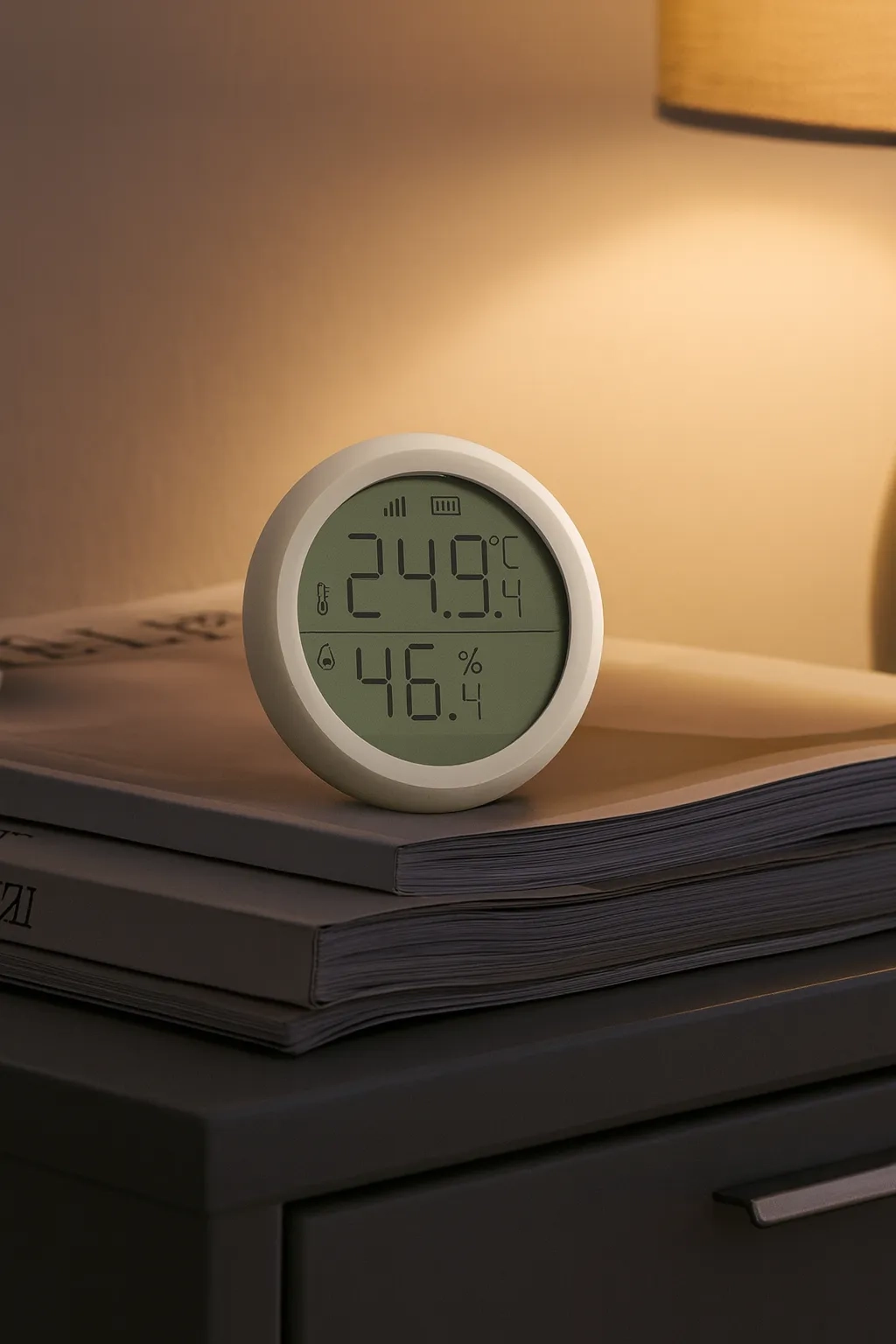
When designing HVAC systems for hotels, engineers traditionally focus on peak thermal loads. However, there is a fundamental aspect that is often overlooked: the moisture load remains constant regardless of room occupancy. This creates a problem when the compressor switches off due to reduced heat load during guest check-out, yet humidity continues to enter with the ventilation air, creating ideal conditions for condensation and mould growth.
The problem of excessive humidity in hotels
Hotel spaces are characterised by sharp fluctuations in thermal loads. When guests check into a room, the heat load increases sharply due to lighting, electronics and human presence. When guests check out or are absent, the heat load drops, but the moisture load remains constant due to the requirement for continuous room ventilation.
Traditional vapour-compression cooling systems very quickly reduce the room temperature to the setpoint, after which the compressor switches off. This leads to a paradoxical situation: the system is off, but moisture continues to accumulate due to the constant inflow of ventilation air.
The consequences of excessive humidity in hotel rooms include:
- A musty odour that causes discomfort for guests
- Damage to the building structure and furniture
- Mould and mildew growth on walls, furniture and within ductwork
Many hotels are forced to regularly replace room furniture specifically due to damage caused by mould and elevated humidity, which significantly increases operating costs.
Technical causes of humidity issues
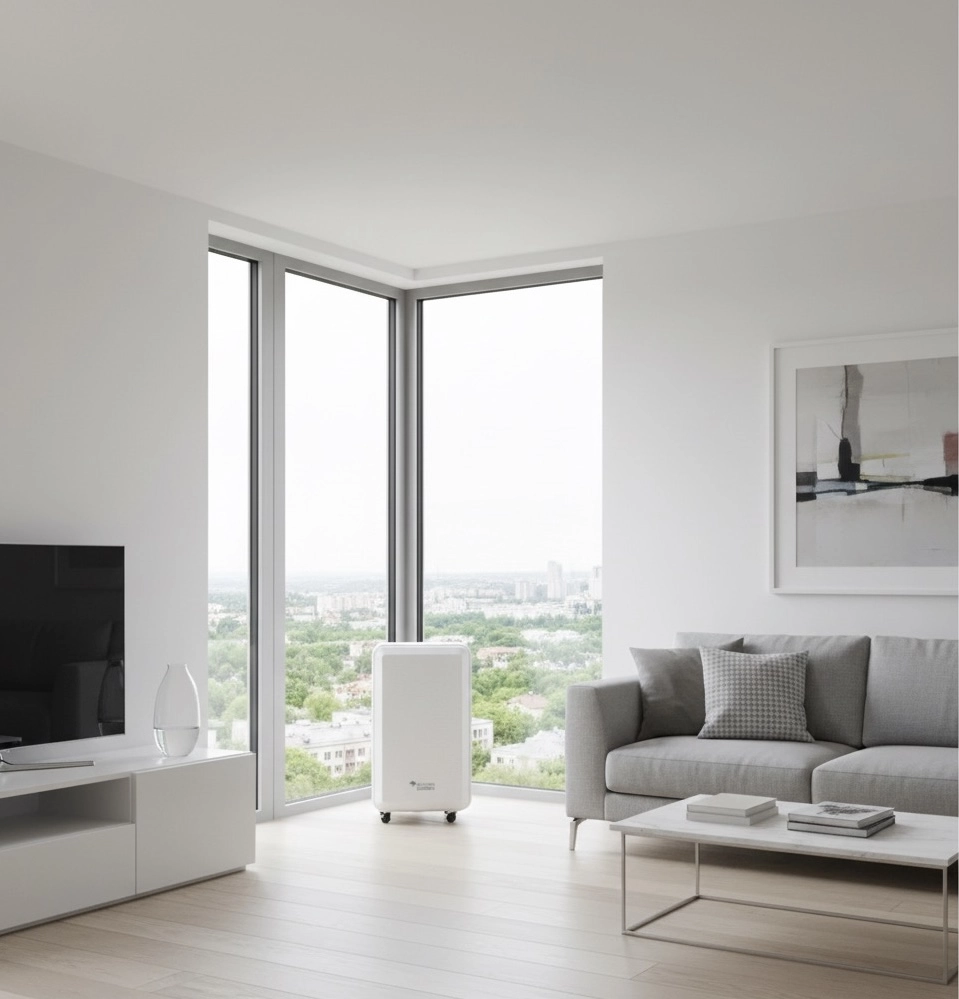
Hotels and conference halls experience significant fluctuations in thermal loads throughout the day. The number of people, equipment use and lighting change constantly, but the ventilation system continues to operate according to regulatory requirements, supplying outdoor air that contains water vapour.
Standard cooling systems effectively remove moisture only during active operation. When the heat load decreases, the compressor switches off and the system loses its ability to dehumidify the air. Effective condensation of moisture on cooling coils requires a low heat-exchanger surface temperature, which is only achieved when the compressor is running.
Psychrometric analysis shows that air leaving the cooling coils remains practically saturated (relative humidity about 90–95%). Such air cannot absorb excess moisture from the space, leading to its accumulation in the room.
Hotel swimming pools and spa areas create an additional challenge. Humidity from these spaces can migrate through the ventilation system to other areas of the hotel if airflows are not properly isolated.
Consequences of inadequate humidity control
Poor humidity control has serious consequences for the hotel business:
Damage to furniture and equipment: Elevated humidity leads to wood warping, mould on upholstered furniture and corrosion of metal fittings. Hotels are forced to replace furniture prematurely, which requires significant capital expenditure. Industry experience shows that hotel chains which have implemented effective humidity control have extended furniture service life by 3–4 years.
Indoor air quality issues: High humidity in ductwork and drain pans creates ideal conditions for microbial growth. This leads to sick building syndrome, where air quality deteriorates and spaces develop a musty odour. Guests feel uncomfortable, affecting their impression of the hotel.
Impact on reputation and revenue: Dissatisfied guests leave negative reviews about odours and discomfort in rooms. This leads to lower ratings on booking platforms, fewer repeat stays and ultimately a loss of revenue. Studies show that comfortable environmental conditions directly influence revenue per available room.
HVAC system upgrade concept
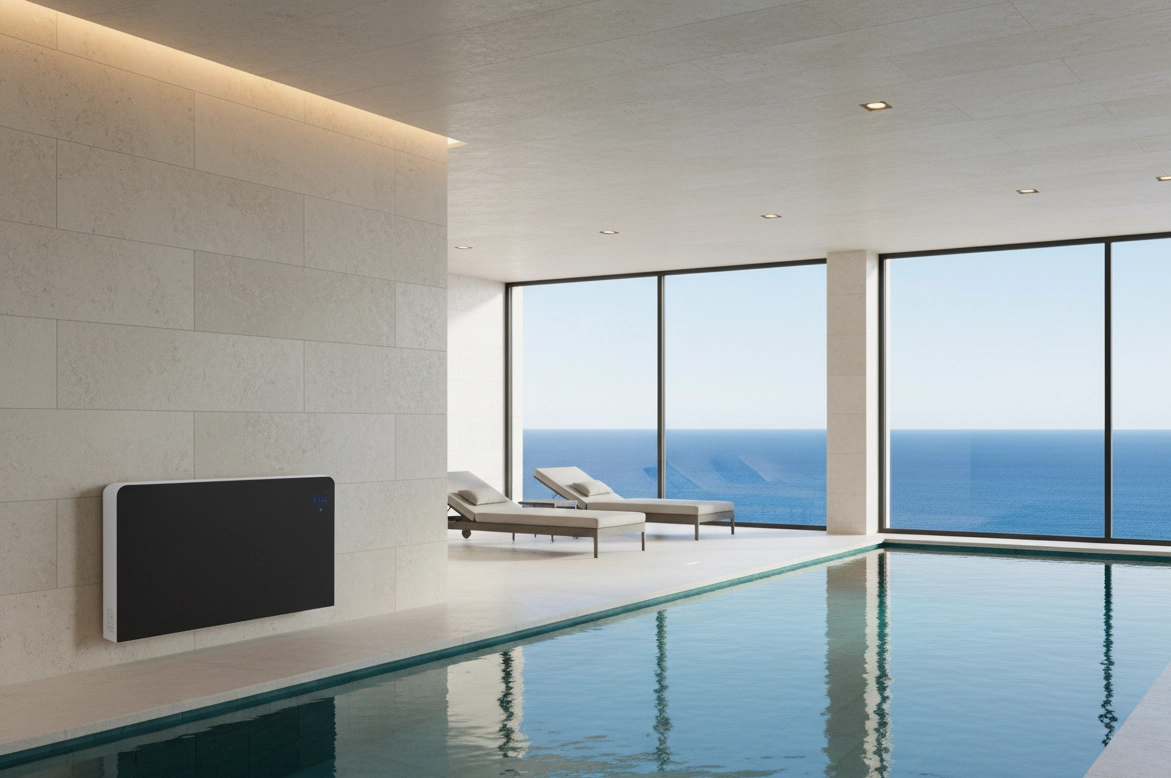
The key solution is to implement independent temperature and humidity control. In such a system:
- Temperature is regulated by the traditional cooling system
- Humidity is controlled by separate dehumidifiers
Deep dehumidification of supply air is a concept where specialised dehumidifiers pre-treat fresh ventilation air before it enters the space. This dried air acts like a “sponge”, able to absorb excess moisture from rooms even when the cooling system is off.
Depending on operating conditions and requirements, two types of dehumidifiers can be used:
- Condensation dehumidifiers – operate by cooling the air below its dew point to condense moisture
- Desiccant (adsorption) dehumidifiers – use sorbents to absorb moisture from the air
The advantage of upgrading over complete replacement of the HVAC system is the ability to retain working equipment, avoiding major capital expenditure. Adding dehumidifiers to the existing system is a cost-effective way to solve humidity issues without a radical rebuild of the entire air-conditioning system.
Technical solutions for the upgrade
The choice of dehumidifier type depends on several factors:
Condensation dehumidifiers are effective at temperatures above 12–15°C and can reduce relative humidity to 40–50%. These values are typical engineering guidelines and should be refined during design in accordance with the manufacturer’s documentation.
Desiccant systems operate effectively at any temperature and provide deeper drying. They are recommended for spaces requiring low humidity levels or where the air temperature is insufficient for condensation dehumidifiers to work efficiently.
There are several ways to integrate dehumidifiers into an HVAC system:
- Dehumidifying incoming fresh air before it is mixed with recirculated air
- Dehumidifying air directly upstream of cooling coils to reduce the latent load on the cooling system
To calculate a hotel’s moisture load, it is necessary to consider:
- Ventilation air in accordance with air-change standards
- Infiltration through lobby doors and service entrances
- Moisture generation from occupants in rooms, corridors and conference halls
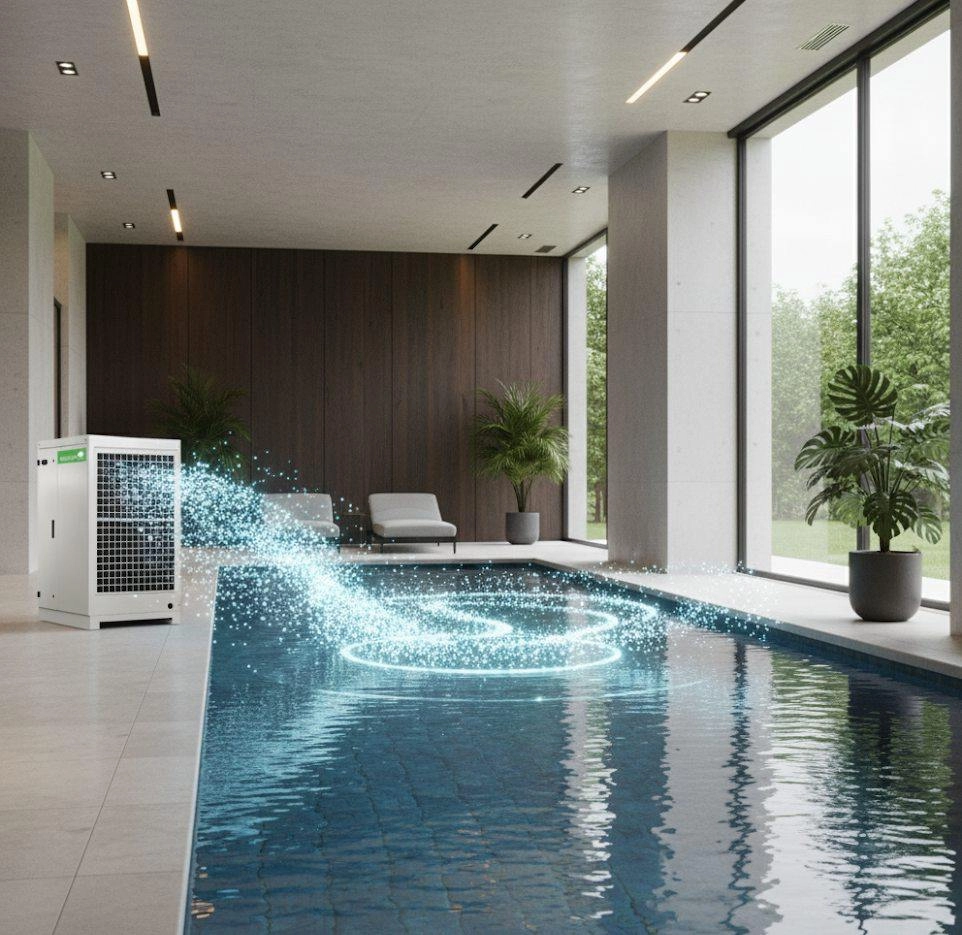
For hotels with pools and spa areas, separate specialised dehumidification systems must be provided, as the moisture load from open water surfaces is too great for the general air-conditioning system.
Cost-effectiveness and ROI
Investing in air dehumidification systems for hotels delivers high economic efficiency for several reasons:
Extending furniture service life: Preventing mould and mildew helps extend furniture life by 3–4 years. For a 100-room hotel, this can mean savings of tens of thousands of pounds sterling per year (this is an illustrative example; exact figures are determined by financial analysis).
Increased guest satisfaction: A comfortable indoor climate and the absence of musty odours result in higher ratings on booking platforms, more repeat bookings and growth in revenue per available room.
Lower maintenance costs: Reducing microbial growth in ductwork lowers the cost of cleaning and disinfecting the ventilation system.
Energy savings for hotels with pools: Specialised dehumidifiers allow a reduction in exhaust ventilation volumes in pool areas, saving energy on heating supply air during the cold season.
A typical payback period for dehumidification systems in mid-range hotels is 2–4 years, depending on the initial condition of the systems and the intensity of operation. Over a 20-year equipment life, the total economic effect can exceed the initial investment by 10–15 times under favourable conditions.
Practical recommendations
For a successful hotel HVAC upgrade, we recommend the following steps:
1. Survey the existing system
- Assess latent moisture removal capacity
- Check the condition of cooling coils
- Measure heat-exchanger surface temperatures and performance
2. Minimise moisture loads
- Seal the building envelope
- Eliminate excessive air leakage through doors and windows
- Optimise ventilation to reduce fresh air volumes without violating standards
3. Phased implementation
It is advisable to start with pilot zones (one floor or a wing) to verify effectiveness before upgrading the entire hotel.
4. Selecting equipment installation points
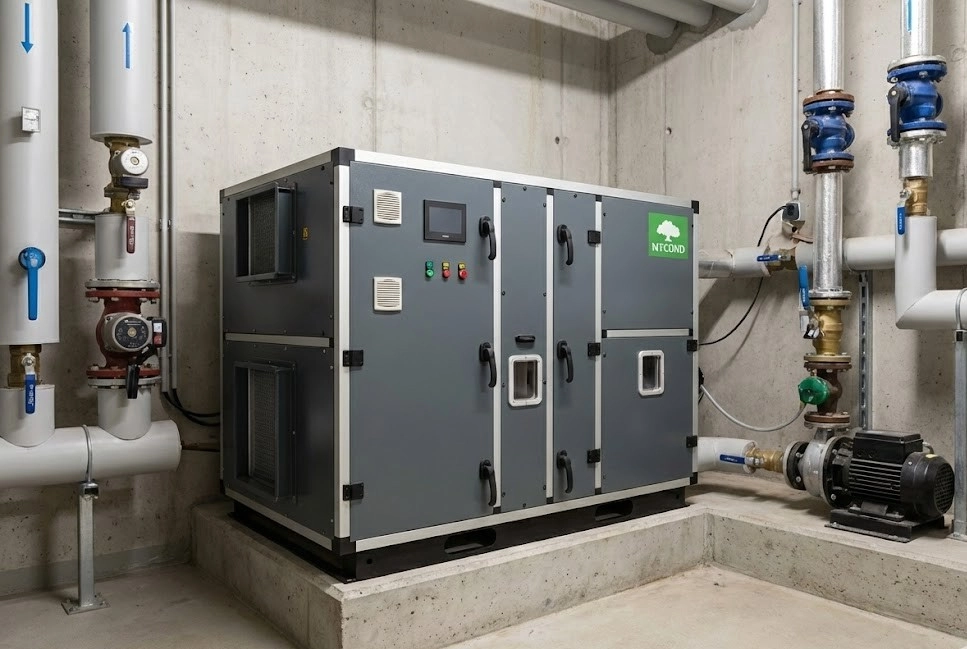
- Rooftop units for centralised supply-air dehumidification
- Plant rooms near existing ventilation units
- Localised solutions for critical zones with high moisture loads
Frequently asked questions
Can dehumidification be added without replacing existing chillers?
Yes, this is one of the core principles of our upgrade approach. Independent humidity control allows you to retain the existing cooling equipment by adding standalone dehumidifiers that operate independently of the cooling system. This significantly reduces capital expenditure compared to a full HVAC replacement.
How much does it cost to upgrade a hotel’s HVAC system?
The cost of an upgrade depends on several key factors: hotel size, type of equipment required, integration complexity with existing systems and local requirements. The exact cost can only be determined after a detailed technical survey of the site and a moisture load calculation.
What is the payback period for a hotel dehumidification system?
A typical payback period is 2–4 years, depending on the initial condition of the HVAC system and the intensity of hotel operation. The calculation factors in savings from extended furniture life, reduced maintenance costs, increased guest satisfaction and growth in revenue per available room. It is important to understand that this is an engineering guideline, not a guaranteed figure.
What humidity level is optimal for hotel rooms?
The optimal relative humidity level for hotel rooms is usually 40–50%. This range ensures guest comfort and prevents mould and fungal growth. Specific values depend on the climate zone, room function and local regulations.
How do you integrate a dehumidification system with the hotel’s existing BMS?
Modern dehumidifiers are equipped with interfaces for connection to building management systems (BMS). Integration is typically carried out via standard communication protocols such as Modbus, BACnet or KNX. This enables centralised humidity control, fault notifications and optimisation of energy consumption across the entire HVAC plant.
Conclusions
Upgrading hotel HVAC systems by adding independent humidity control is an effective solution to a fundamental problem of traditional air-conditioning systems, which cannot dehumidify effectively at low thermal loads.
Investing in HVAC upgrades strikes a sound balance between capital costs and long-term operational efficiency. Savings on furniture replacement, higher guest satisfaction and lower maintenance costs create a sustained economic benefit throughout the equipment life cycle.
When choosing a technical solution, prioritise equipment reliability, ease of integration with existing systems, energy efficiency and minimal maintenance requirements.
In the long term, effective humidity control becomes a competitive advantage for a hotel by improving service quality and optimising operating costs. Comfortable conditions are not merely a technical issue but a key factor that directly affects ratings, reputation and the financial performance of the hotel business.


