









































Author: Mycond Technical Department
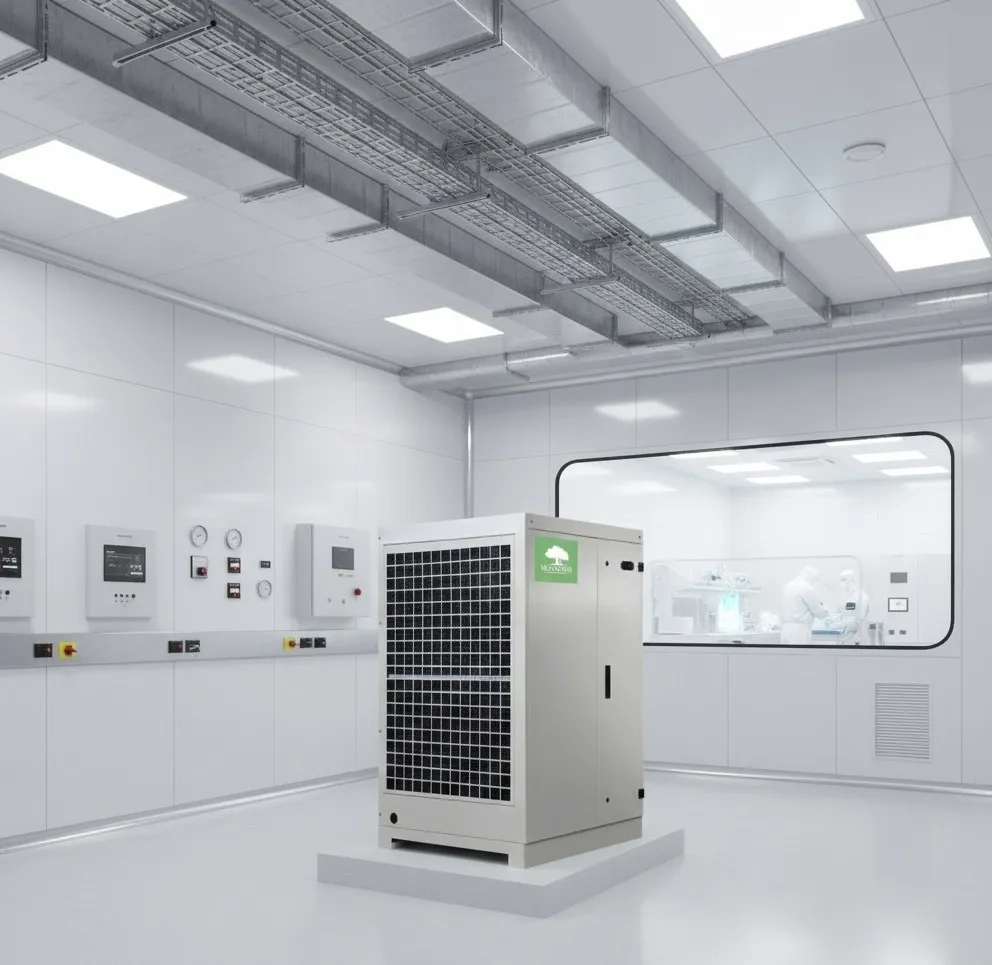
Humidity control is one of the most critical aspects of pharmaceutical manufacturing. In this sector, where the quality and safety of the final product directly affect human health, even minor deviations from optimal microclimate parameters can lead to serious consequences. Air dehumidification technology in the pharmaceutical industry is not just an engineering solution, but a fundamental basis for ensuring compliance with stringent GMP standards and guaranteeing the quality of medicines.
The criticality of humidity control in the pharmaceutical sector
The pharmaceutical industry is governed by extremely strict hygienic standards, among which humidity control plays a central role. Elevated humidity can become a breeding ground for microorganisms, which is completely unacceptable in the manufacture of medicines. At the same time, excessively low humidity can cause issues with static electricity and changes in material properties.
Humidity directly affects product quality at all stages of the production process. From preserving the properties of active pharmaceutical ingredients to the stability of finished dosage forms — every aspect depends on the correct humidity level. Different pharmaceutical processes require different climatic conditions: from high temperature with low humidity to low temperature with low humidity.

Hygroscopic properties of pharmaceutical materials
Hygroscopicity is the ability of a substance to absorb moisture from the surrounding environment. Many pharmaceutical materials are hygroscopic, which means humidity must be strictly controlled to maintain their properties. The mechanism of moisture uptake is based on physicochemical interactions between water molecules and the material, with the intensity of this process depending on the relative humidity of the air and the chemical structure of the substance.
Typical hygroscopic substances used in the pharmaceutical industry include sodium and potassium salts, hydroxides, nitrates, sulphates, phosphates and numerous active pharmaceutical ingredients (APIs). Excessive moisture uptake leads to powder caking, loss of flowability, blockage of transport paths in production equipment and even undesirable chemical reactions with condensate, which can alter the structure and efficacy of medicines.
Humidity requirements at the tabletting stage
At the tabletting stage of pharmaceutical products, typical parameters are 10-20% relative humidity at a temperature of 20°C. Such low humidity levels are necessary to ensure the stability of active ingredients and the proper characteristics of the tablet blend. Low humidity directly affects the operating speed of tablet presses — under optimal parameters equipment productivity increases and the risk of fouling decreases.
The humidity level also determines product shelf life. With properly controlled humidity it is possible to significantly increase the shelf life of pharmaceutical products. In professional environments, dew point (for example, −11°C) is often specified instead of relative humidity to avoid confusion when temperature fluctuates, since relative humidity is a function of temperature, whereas dew point provides an absolute value of the moisture content in the air.

Humidity control during packaging
The packaging process in the pharmaceutical industry faces specific humidity-related challenges. Product stickiness to packaging equipment is one of the most common issues arising under elevated humidity conditions. This can lead to production line stoppages, material losses and reduced overall manufacturing efficiency.
Humidity also has a direct impact on the integrity of packaging and labels. Under excessive humidity, delamination of multilayer packaging materials, poor bonding, deformation of boxes and label peeling are possible. Typical requirements for packaging areas are 30-45% relative humidity at a temperature of 20-22°C, which provides an optimal balance between product protection and the operability of packaging equipment.
Storage of hygroscopic powders
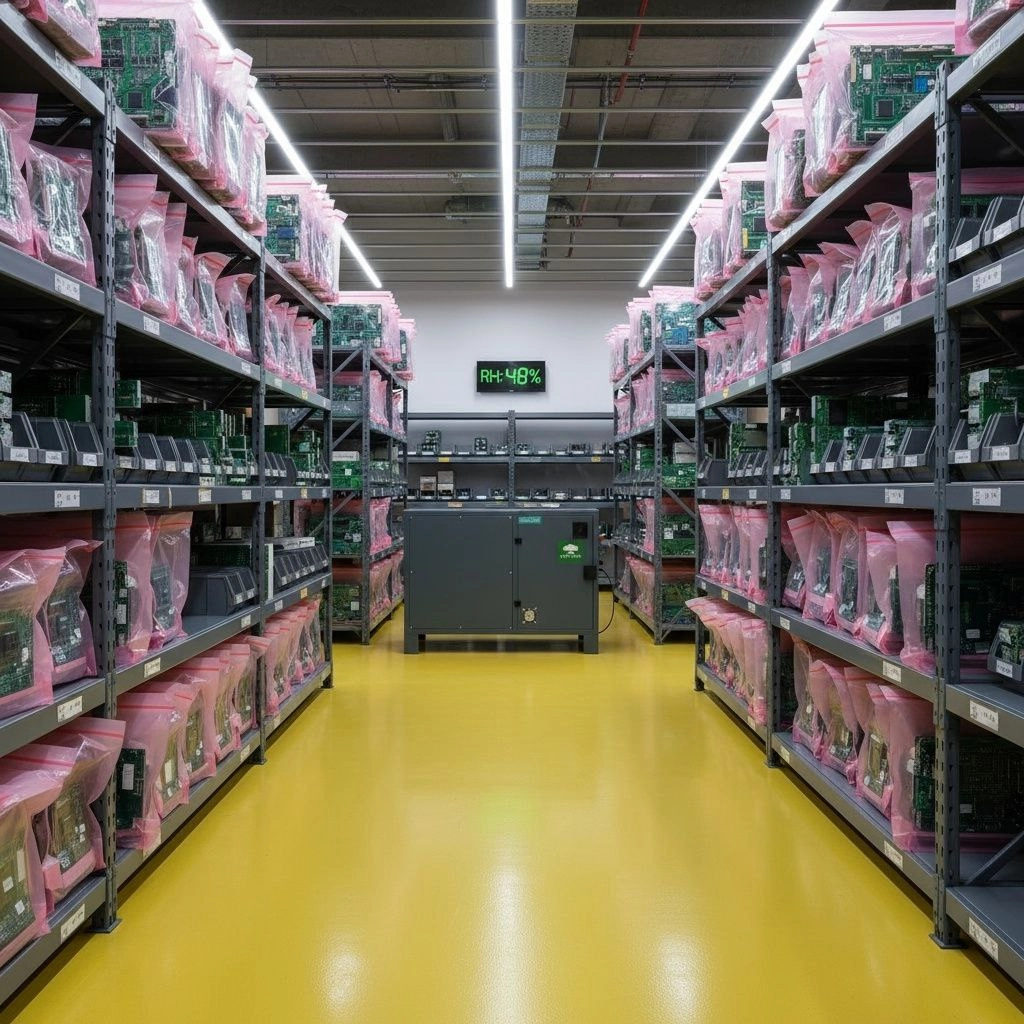
The storage of pharmaceutical raw materials requires special conditions to preserve their quality. Different materials have their own requirements; for example, for storing vaccines a level of 50% RH at 20°C is often applied. After washing and disinfection, storage silos require thorough dehumidification before reloading to prevent moisture uptake and material spoilage.
Maintaining flowability is a critically important aspect throughout the entire material path — from silos through conveyors to final storage. Even a temporary increase in humidity can cause caking, which disrupts the technological process and can lead to non-uniformity in the composition of the final product.
Dehumidification technologies
A variety of dehumidification technologies are used in the pharmaceutical industry, each with its advantages and limitations. Condensation dehumidification is based on cooling the air below the dew point, which causes moisture to condense. This method is effective at moderate humidity levels but has significant limitations at low temperatures and when low humidity levels are required.
Adsorption dehumidification, which uses sorbents to absorb moisture from the air, has significant advantages for pharmaceuticals, especially when a dew point below +5°C is required. This technology allows for extremely low humidity levels, which is critical for many pharmaceutical processes.
For maximum efficiency and energy saving, combined dehumidification systems with pre-cooling are often used. In such systems, the air is first cooled to remove most of the moisture and then directed to an adsorption dehumidifier to achieve the required low humidity level.
Methodology for calculating moisture loads
The calculation of moisture loads is a fundamental stage in the design of dehumidification systems for pharmaceutical production. Among moisture sources, the largest contribution usually comes from supply air, especially in regions with high natural humidity. Other sources include personnel (each person releases approximately 50-100 g of moisture per hour), door openings, diffusion through the building envelope and moisture from technological processes.
In a typical tabletting room, the calculation of moisture load must take all these factors into account. For example, for a room with an area of 100 m² with 5 operators and equipment, the total moisture load may be from 2 to 5 kg of moisture per hour. The impact of exhaust ventilation above mixers should also be considered, as it creates an additional load on the dehumidification system due to the need to compensate for the removed air.
Typical design errors
When designing dehumidification systems for pharmaceutical production, several critical mistakes are common. Underestimating the load from supply air often leads to insufficient dehumidification capacity, especially in seasons with high humidity. Neglecting proper room sealing also significantly reduces the effectiveness of humidity control systems.
Another common mistake is the incorrect choice of the control parameter (relative humidity instead of dew point), which can lead to a misinterpretation of conditions in the room and an inadequate response of automation systems. The absence of airlocks between zones with different humidity requirements causes the ingress of humid air into critical areas.
The operational consequences of these mistakes can be extremely serious: product defects, production equipment downtime, violations of GMP standards and potential product recalls from the market.
Engineering FAQ
What is the optimal humidity for tabletting?
The optimal humidity for the tabletting process is usually 10-20% relative humidity at a temperature of 20°C, which corresponds to a dew point of approximately −11°C to −6°C. These parameters ensure the preservation of the properties of active ingredients and optimal powder flowability.
Why are adsorption dehumidifiers more effective at low humidity?
Adsorption dehumidifiers are more effective at low temperatures and for achieving very low humidity levels because their operating principle does not depend on condensation. They can continue to remove moisture effectively even when the required dew point is well below 0°C, whereas condensing systems are physically limited by the risk of ice formation on evaporators.
How do you calculate the moisture load from personnel?
To calculate the moisture load from personnel, average moisture emission figures per person are used: for light activity — 50-70 g/h, for moderate activity — 70-100 g/h, for heavy physical work — 100-150 g/h. The total load is calculated by multiplying these values by the number of employees and the duration of their presence in the room.
What is the dew point and why is it important to specify it?
The dew point is the temperature to which air must be cooled (at constant pressure) for the water vapour in it to begin to condense. It is an absolute indicator of moisture content that does not depend on temperature, unlike relative humidity. Specifying the dew point instead of relative humidity helps avoid misunderstandings when the room temperature changes and ensures more precise humidity control.
How does air velocity affect dehumidification efficiency?
Air velocity significantly affects dehumidification efficiency. Excessively high velocity can lead to uneven air distribution in the room and reduce the effectiveness of air contact with the adsorbent in dehumidifiers. The optimal air velocity through an adsorption rotor is usually 2,5-3,5 m/s, and in rooms the recommended air movement speed should not exceed 0,2-0,3 m/s to ensure comfortable working conditions.
Practical technical conclusions
Humidity control in the pharmaceutical industry is a complex technical task that requires a deep understanding of physical processes, material properties and production specifics. The correct approach to designing dehumidification systems includes accurate calculation of moisture loads, selection of the appropriate dehumidification technology and careful planning of automation and control systems.
Particular attention should be paid to the boundaries between zones with different humidity requirements, the use of airlock systems and ensuring reliable airtightness of rooms. It should be remembered that improper humidity control can have serious consequences for the quality and safety of pharmaceutical products, and therefore for patient health.
The application of modern engineering approaches to humidity control not only ensures compliance with GMP standards, but also optimises production processes, reduces energy consumption and improves product quality. Investments in high-quality air dehumidification systems always pay off through a reduction in defective products, extended equipment service life and the stability of production processes.


