









































Modern laboratories and industrial facilities widely use climatic chambers to test materials and equipment under varied conditions. Precise air dehumidification for climatic chambers is a critical factor that affects the reliability of test results. Climatic and test chambers require high-precision humidity control systems capable of maintaining stable conditions even under significant temperature fluctuations.
Humidity control systems for test chambers must respond quickly to changes in operating modes and maintain the required humidity level across a wide temperature range. This is especially important for UK businesses working with high-tech materials and equipment, where test accuracy directly affects final product quality.
Main types of dehumidification for climatic chambers
Two principal dehumidification types are used in modern climatic chambers: adsorption and condensation. Each has its advantages and limitations, especially when a wide temperature range is required.
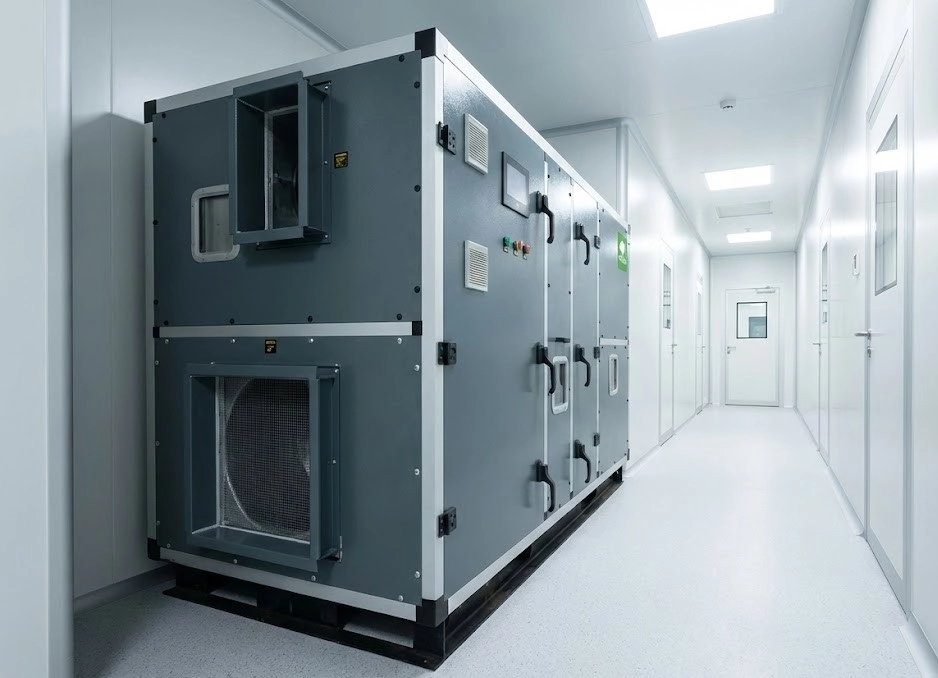
Adsorption dehumidification for low temperatures
Adsorption dehumidification at low temperatures relies on hygroscopic materials (desiccants) that absorb moisture from the air. This method is effective at temperatures down to -30°C and below, making it indispensable for cryogenic test chambers. Adsorption dehumidifiers can achieve extremely low dew points, which is critical for maintaining low relative humidity at sub-zero temperatures.
The effectiveness of adsorption systems largely depends on the adsorption capacity of the desiccants, which varies with temperature. As temperature falls, the adsorption capacity of materials can decrease, requiring appropriate design measures.
Condensation dehumidification and its temperature limits
Condensation dehumidifiers operate by cooling air below its dew point, causing moisture to condense. This method has clear temperature boundaries, typically working effectively at temperatures above +5°C. At lower temperatures efficiency drops sharply, and at sub-zero temperatures ice forms on heat exchangers.
Condensation systems are more energy-efficient than adsorption ones within the normal temperature range, but they are limited when very low humidity levels are required.
Sizing dehumidification systems for dynamic modes
For correct operation of a climatic chamber, the dehumidification system parameters must be calculated precisely, taking account of the specifics of dynamic operating modes.
How to size a dehumidifier for a climatic chamber
When selecting and sizing a dehumidifier for a climatic chamber, consider the following factors:
- Chamber volume and air exchange
- Maximum and minimum operating temperature
- Required relative humidity range
- Rate of change of environmental parameters
- Moisture release rate from test specimens
- Chamber tightness and potential sources of moisture ingress
Capacity sizing for dynamic modes should account not only for static parameters but also the speed of transients. The dehumidifier should have a performance margin to cover peak loads during mode changes.
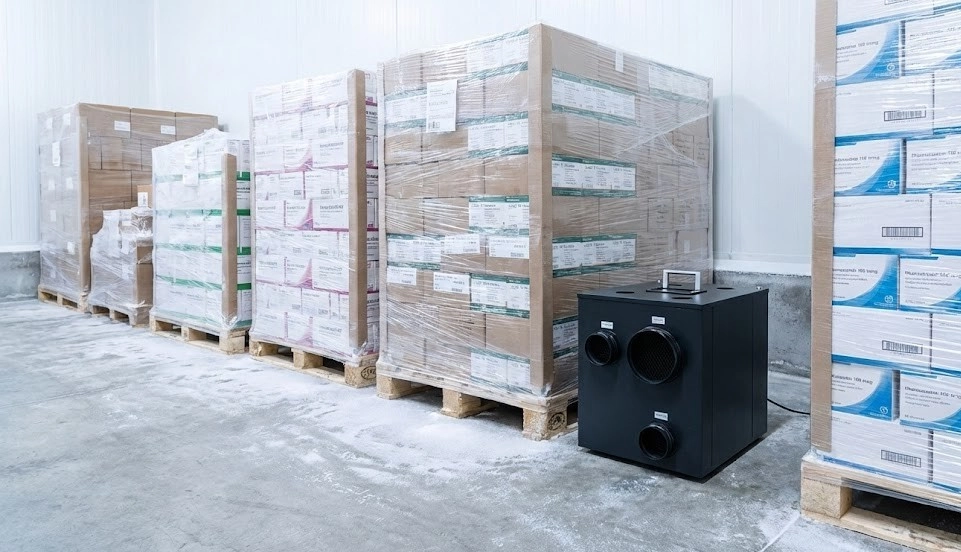
Standards requirements for humidity accuracy in chambers
International standards such as IEC 60068-2-78 and MIL-STD-810G set stringent requirements for maintaining humidity accuracy in chambers. Typical permissible deviations are ±2-3% relative humidity in steady state and ±5% during transients. To meet these requirements, you must correctly size not only the dehumidifier but also the automatic control system.
Psychrometric processes at variable temperature
Understanding psychrometric processes under changing temperature is key to designing effective humidity control systems.
Rate of change of temperature and humidity
The rate of change of temperature and humidity in a climatic chamber is limited not only by the power of the heating/cooling and dehumidification/humidification systems, but also by the inertia of the processes themselves. Typical climatic chambers can change temperature at 1-3°C per minute and humidity by up to 5% RH per minute.
With a sharp temperature change, relative humidity also changes due to the change in the moisture-holding capacity of saturated air, even if the absolute moisture content remains unchanged. This phenomenon requires a fast response from the dehumidification system to compensate.
What determines the dehumidification system response time
The response time of a dehumidification system depends on the following factors:
- Dehumidifier type (adsorption systems usually respond faster)
- Dehumidifier capacity relative to chamber volume
- Effectiveness of air exchange and distribution within the chamber
- Control algorithms and sensor sensitivity
- Thermal inertia of the chamber construction and test specimens
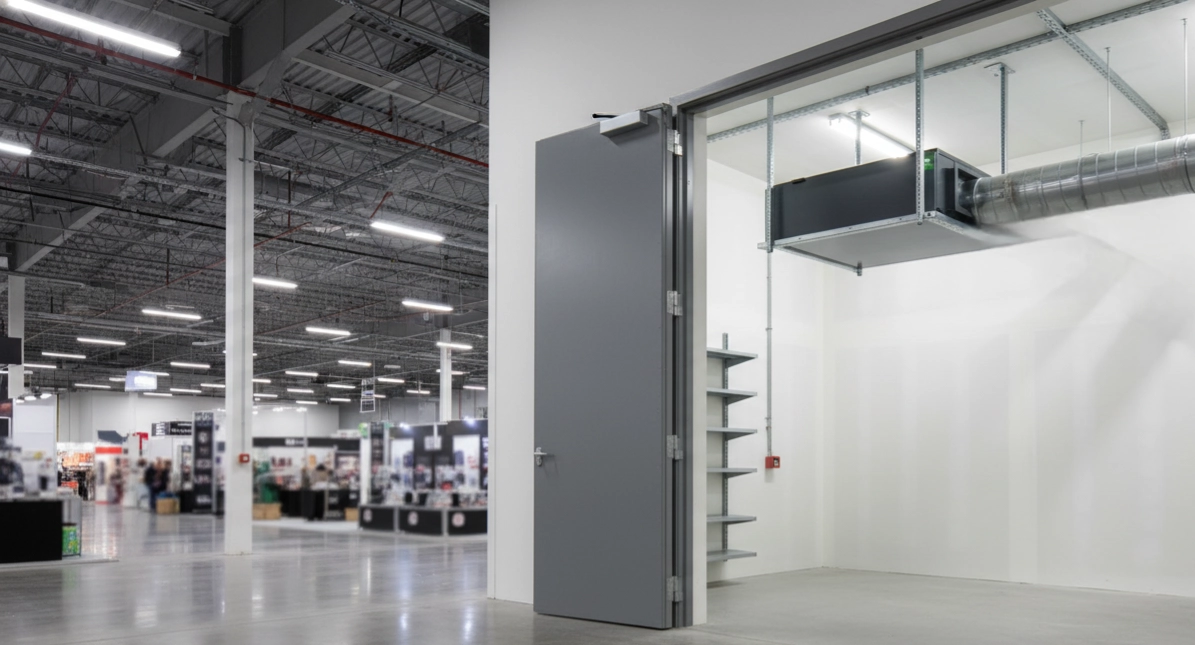
Dew point during abrupt temperature changes
During abrupt temperature changes, the dew point may temporarily exceed the surface temperatures inside the chamber, leading to unwanted condensation. This is especially critical when transitioning from high to low temperatures. A properly designed system should anticipate such situations and avoid them by pre-dehumidifying before lowering the temperature.
Technical aspects of dehumidification systems
To ensure stable operation across a wide range of conditions, system inertia must be considered and methods provided to compensate humidity loads.
Inertia and combined dehumidification for a wide range
Dehumidification system inertia is the delay between a change in operating parameters and achieving new conditions in the chamber. To reduce inertia, combined dehumidification for a wide range is often used, where adsorption and condensation technologies operate together.
Such a system leverages the advantages of both methods: the energy efficiency of condensation dehumidifiers at moderate temperatures and the ability of adsorption systems to operate at low temperatures and reach deep drying.
Humidity load during mode changes
The humidity load during mode changes can significantly exceed calculated values for steady conditions. Additional moisture sources can include:
- Desorption of moisture from chamber materials as temperature rises
- Evaporation from test specimens
- Moisture infiltration from outside through seals during pressure changes
- Residual moisture in the air distribution system
Why relative humidity changes during heating
Relative humidity decreases during heating because the moisture-holding capacity of air increases. With constant absolute moisture content, a 10°C temperature rise can approximately halve the relative humidity. This fundamental psychrometric relationship requires compensation by adding moisture or pre-humidifying before heating.
Features and limitations of different dehumidifier types
Selecting the optimal dehumidifier type requires understanding their specific limitations and operating characteristics.
Temperature limits of condensation dehumidifiers
The temperature limits of condensation dehumidifiers are determined by the physics of condensation and the technical constraints of refrigeration systems:
- The lower limit for effective operation is usually +5°C
- The minimum achievable dew point is limited by evaporator temperature (typically not below -5°C)
- Above +35°C efficiency decreases due to limited cooling capacity
Temperature dependence of desiccant adsorption capacity
The adsorption capacity of desiccants depends on process temperature and the type of adsorbent. Silica gel, zeolites and molecular sieves exhibit different characteristics at different temperatures. In general, as temperature decreases the adsorption capacity of most materials reduces, which calls for increased adsorbent volume or more frequent regeneration.
Buffering in humidity control systems
Buffering in humidity control systems is the system’s ability to smooth humidity fluctuations via intermediate buffer zones or additional capacity. This can be implemented by:
- An intermediate buffer volume with controlled parameters
- Heat and moisture recovery systems
- Using hygroscopic materials in the chamber construction
- Multi-stage air-treatment systems with separate control at each stage
Typical mistakes and recommendations
When designing dehumidification systems for climatic chambers, common mistakes are often made that can be avoided.
Typical mistakes when selecting dehumidifiers for chambers
The most common mistakes when selecting dehumidifiers for climatic chambers are:
- Underestimating dynamic load during mode changes
- Disregarding dehumidifier temperature limits
- Choosing a dehumidifier solely by nominal capacity without accounting for real operating conditions
- Ignoring system inertia during rapid mode changes
- Sub-optimal placement of humidity sensors and insufficient response speed
Impact of desiccant regeneration time
Desiccant regeneration time directly affects the continuity of dehumidification. In climatic chambers with stringent stability requirements, systems with a continuously rotating wheel or redundant adsorption circuits are recommended to ensure uninterrupted dehumidification even during adsorbent regeneration.
Methodology for determining the required dehumidification rate
A proper methodology for determining the required dehumidification rate should consider:
- Base load in steady state
- Additional load during transitions between modes
- Required time to reach set conditions
- Allowable relative humidity deviations
- Safety factor to compensate for unforeseen factors (typically 20-30%)
Conclusions
Effective air dehumidification for climatic chambers requires a comprehensive approach that considers all factors affecting humidity-control accuracy. To achieve maximum accuracy, you must select the correct dehumidifier type, size its capacity with dynamic modes in mind, and provide an optimal control system.
In many cases, combined systems that unite the advantages of different dehumidification technologies are the optimal solution. This ensures reliable operation across a wide range of temperatures and humidity and rapid adaptation to changing test conditions.
What affects humidity control accuracy
The following factors affect the accuracy of maintaining humidity in chambers:
- Accuracy and response speed of humidity sensors
- Control algorithms and the ability to predict changes
- Dehumidification system capacity and its alignment with real loads
- Effectiveness of air distribution within the chamber
- Thermal and moisture inertia of the chamber design
Call to action
To ensure maximum accuracy and reliability of testing in your climatic chambers, contact the specialists at Mycond. Our experts will help select the optimal air dehumidification solution, calculate the required system capacity, and provide precise humidity control even in the most challenging conditions.
For advice on dehumidification systems for climatic chambers in the United Kingdom, contact our representatives in London, Birmingham, Manchester, Glasgow, Liverpool or Edinburgh.
Frequently asked questions
What is the minimum relative humidity achievable at low temperatures?
Using adsorption dehumidifiers, relative humidity down to 5% can be achieved even at temperatures as low as -40°C, although special technical solutions are required.
How often should humidity sensors in climatic chambers be calibrated?
The recommended calibration interval is every 6-12 months, depending on usage intensity and the operating temperature range.
What is the best choice for a chamber with a temperature range from -20°C to +80°C?
For such a wide range, an optimal solution is a combined system with an adsorption dehumidifier for low temperatures and a condensation unit for operation from +5°C to +80°C.


