


Detailed Forecast of Solar Energy Development in Europe for 2024-2027
General Overview
The European solar energy market is anticipated to maintain steady growth from 2024 to 2027, primarily driven by legislative initiatives, energy transition plans, and the pursuit of energy independence from Russian gas. Despite facing challenges such as permitting processes, grid capacity limitations, and a shortage of skilled labor, Europe is set to remain a significant player in the global solar market.
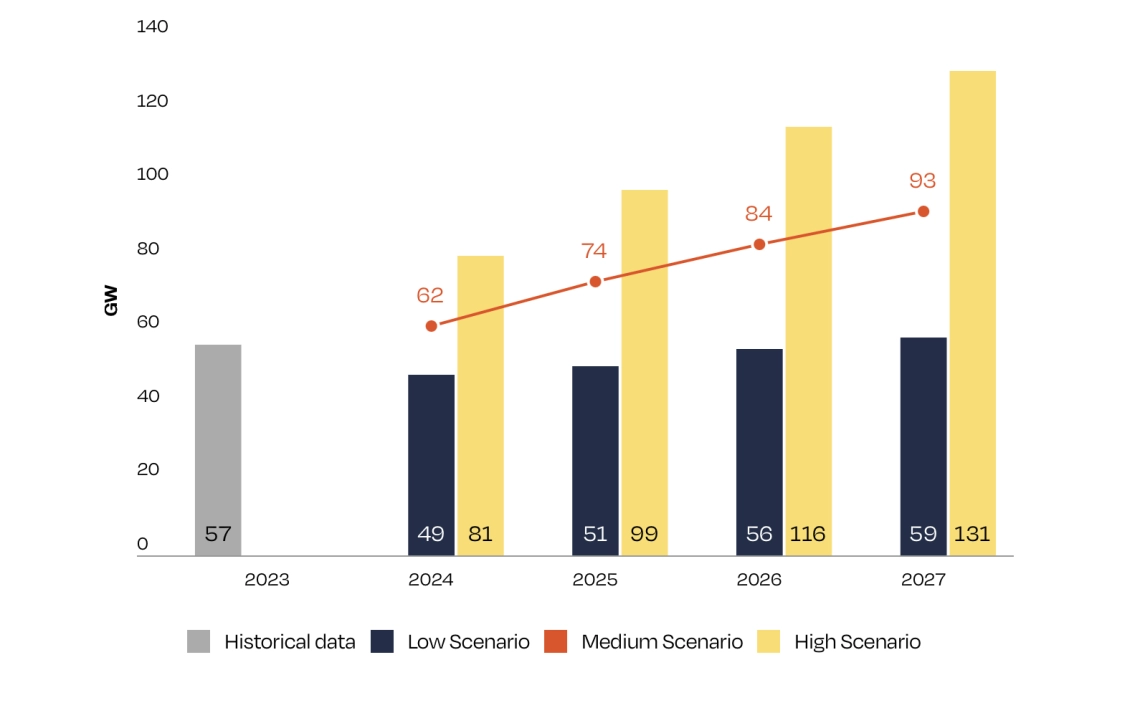
Forecast of Capacity Installation The European Union (EU) is projected to increase its share of the global solar market to 19%, adding 120 GW of installed capacity by 2027. This growth will be supported by the EU's commitment to enhance its 2030 renewable energy targets and decrease reliance on Russian gas through the REPowerEU initiative.
Key Markets and Key Players
- Germany: Expected to install over 20 GW of new capacity in 2026, bolstered by both large-scale solar projects and the growth of the rooftop solar market.
- Spain: Forecast to install 18.1 GW of new capacity in 2026, playing a crucial role in the national renewable energy strategy.
- Italy: Significant growth with more than 4 GW installed in 2023, reflecting substantial improvement from previous years.
Technological and Market Trends
- Lower Prices: Decreasing prices for solar modules and components enhance the attractiveness of solar energy for consumers and investors.
- Development of Distributed Generation: The rise of rooftop solar systems and energy storage technologies empowers consumers to become energy producers, contributing to energy independence and efficiency.
- Integration with Other Renewable Energy Sources: Hybrid solar power plants, which combine solar with other sources like wind and storage, offer a stable energy supply and additional services to the electricity grid.
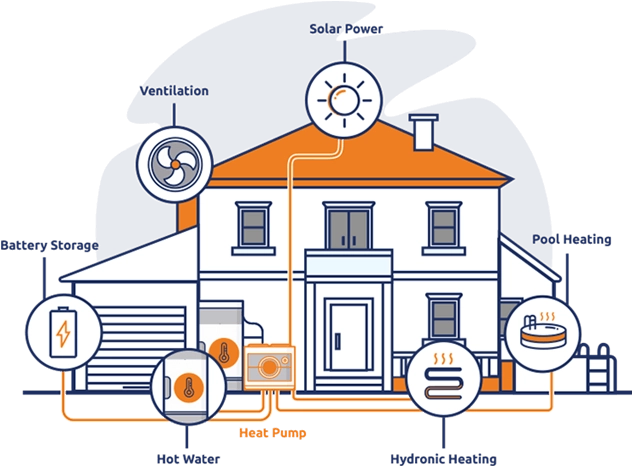
Development of the Market for Hybrid Systems Combining Heat Pumps and Solar Power Plants in Europe from 2024
Context and Background Legislative Support and Policy Initiatives
- Green Deal: The European Commission continues to back initiatives aimed at reducing carbon emissions. The European Green Deal seeks to make Europe climate neutral by 2050.
- Financial Instruments: Subsidies, tax incentives, and other financial supports are available for the adoption of renewable energy sources and energy-efficient technologies.
Market Growth and Trends 2024-2025
- Increased Demand: Consistent growth in demand for combined heat and power systems due to a favorable legal framework and financial backing.
- Infrastructure Development: Active installation of infrastructure to support integrated systems in new and renovated buildings.
2026-2028
- Technological Improvements: Lower production costs and enhanced efficiency of heat pumps and solar panels.
- Mass Adoption: Deployment of systems in residential, commercial, and industrial settings.
2029-2030
- Massive Integration with Smart Grids: Systems will become part of smart grids, facilitating efficient energy use and stable supply.
- Expanding Markets: Growth into Eastern European markets due to reduced technology costs and heightened awareness.
Technological Innovations
Energy integration and management
- Intelligent control systems: The application of artificial intelligence to optimize the operation of heat pumps and solar panels, maximizing efficiency and minimizing energy costs.
- Battery systems: Advances in battery technology enable the storage of surplus energy generated by solar panels for use during peak periods.
High-performance components
- Improved materials: The utilization of new materials for solar panels and heat exchangers in heat pumps enhances their efficiency and durability.
- Hybrid systems: Development of hybrid systems that integrate heat pumps with other heat sources (e.g., gas boilers) to ensure a stable heat supply under all conditions.
Interaction with the energy system
Smart homes
- Automation: The integration of combined systems into smart homes to automatically manage energy consumption based on weather conditions and occupant needs.
- Energy efficiency: The implementation of intelligent systems to minimize energy losses and enhance the overall energy efficiency of buildings.
Energy communities
- Local microgrids: The establishment of energy communities where individual households collaborate to share energy produced by solar panels and heat pumps.
- Energy exchange: The adoption of technologies to facilitate the sharing of excess energy among community members, promoting more efficient resource utilization.
Development of hydrogen production and storage systems from 2024
Hydrogen production and storage systems
Market growth and trends
2024-2025: The initial phase of hydrogen technology market expansion. Governments and the private sector are actively investing in research and development. The number of demonstration projects is expected to rise.
2026-2028: The onset of mass production of hydrogen from renewable sources such as solar and wind energy. Development of infrastructure for hydrogen transportation and storage.
2029-2030: The widespread implementation of hydrogen technologies in the industrial sector, transportation, and energy systems. Hydrogen becomes a crucial component in reducing carbon emissions.
Technological innovations
Next-generation electrolysers: The development of more efficient and cost-effective electrolysers for hydrogen production from water using electricity from renewable sources.
- Hydrogen storage: Enhancements in hydrogen compression, liquefaction, and storage technologies to ensure safe and efficient usage.
- Integration with power systems: Utilizing hydrogen as energy storage within integrated power systems to balance loads and ensure uninterrupted energy supply.
Synergy of solar energy and hydrogen technologies
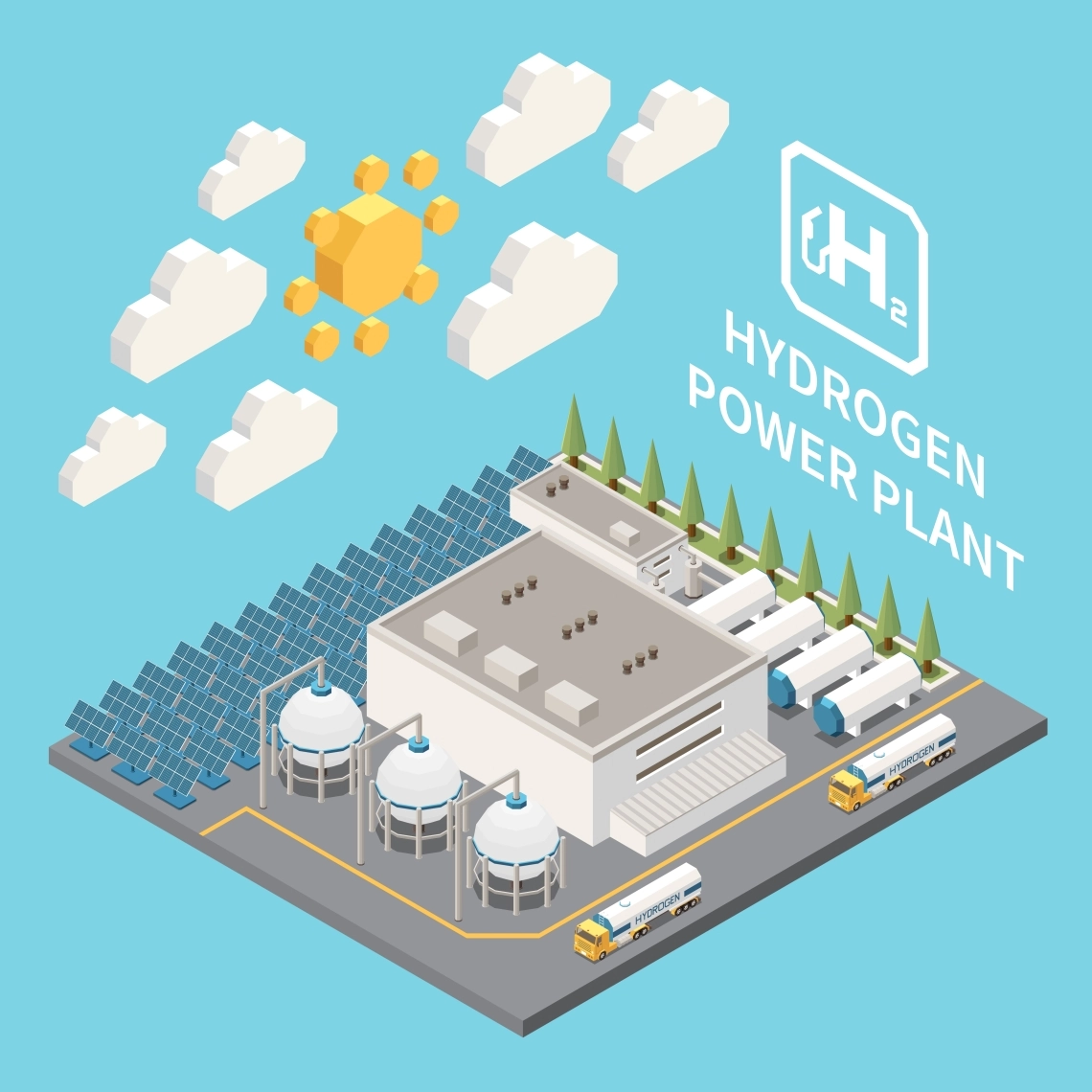
Hydrogen production using solar energy: Solar power plants can be utilized to power electrolysers that generate hydrogen. This enables the use of excess energy produced during the day for hydrogen production, which can be stored and utilized at night or during peak demand periods.
- Energy storage and transportation: Hydrogen can serve as a storage medium for energy generated by solar power plants, facilitating more efficient utilization of renewable energy and reducing reliance on traditional sources.
- Use of hydrogen in various sectors: Hydrogen produced from solar energy can be applied across various sectors, including transportation (hydrogen fuel cells for vehicles, trucks, ships), industry (high-temperature processes), and energy (electricity generation in hydrogen power plants).
Implementation of Innovative Technologies in Business from Aklima Group and Mycond
Aklima Group of Companies, the exclusive representative of the British brand Mycond, is a leader in the implementation of innovative climate control technologies in Europe. Under the Mycond brand, the company and its partners actively develop the market for heat pumps and other energy efficiency equipment. Thanks to an effective business model of local exclusive franchises, Mycond provides partners the opportunity to quickly start and implement their business with minimal costs.

Benefits of Working with Mycond
- High-quality equipment at a reasonable price: Mycond offers its customers reliable and efficient climate control equipment that meets high quality standards, confirmed by Keymark certification and BAFA listing. At the same time, the equipment is available at competitive prices, which ensures strong demand for the brand's products in the European market.
- A complete business kit: Partners receive everything they need to successfully launch their business, including CRM and ERP software, marketing materials adapted to the local language, and websites. This allows you to launch your business and attract customers quickly and efficiently.
- Staff training programme: Mycond provides partners with a complete training programme for their staff and their customers, including sales, selection, design, installation and service training. This helps ensure a high level of service and customer satisfaction.
- Remote support department: Partners have access to a remote technical support department that works on the client's needs and partially serves their operations, providing assistance with marketing and lead generation in the local market, technical support for the partner's clients and assistance in other aspects of doing business. This allows us to quickly resolve any problems and maintain a high level of service without spending time searching for staff and training them.
- Software services: Mycond offers a wide range of software services to help you start and run your business quickly and efficiently. This includes CRM systems for managing customer interactions, ERP systems for managing business processes, as well as other tools for optimising and improving the quality of work.
- Availability of equipment: The equipment is available both in warehouses in Europe and for wholesale ordering from factories. This allows partners to receive products quickly and meet the needs of their customers.
- Financial accessibility: It is possible to start a joint partnership business from as little as €5,000. In addition, there are funding programmes for partner businesses to purchase equipment, making this business accessible to a wide range of entrepreneurs.
Conclusion
The local exclusive franchise model offered by Aklima and Mycond ensures a quick and efficient business launch with minimal start-up costs. Partners receive a complete business kit, including software, marketing materials, staff training, and technical support. This allows them to focus on sales and providing high-quality customer service locally while Aklima Group's qualified employees assist with strategic business development. Fill out the form to receive the terms of cooperation.


